
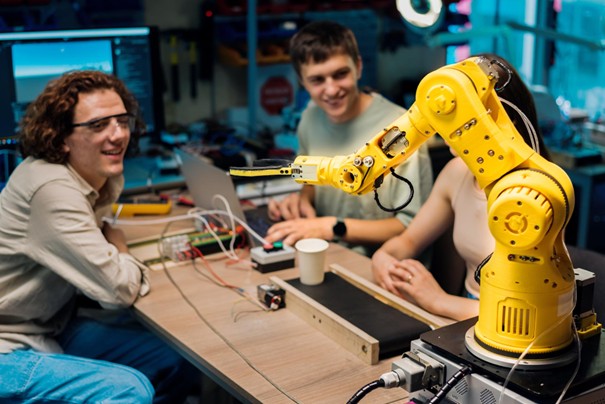
The CROCEMS e-learning platform is designed to equip learners with the essential skills needed to integrate collaborative robotics into the circular economy. The first module, Collaborative Robotics Basics – Modular Design & Behaviour, lays the groundwork for understanding the role of cobots (collaborative robots) in modern manufacturing and sustainable production processes.
What Does Module 1 Cover?
Module 1 introduces the fundamental principles of collaborative robotics and how these systems differ from traditional industrial robots. It explores the design, functionality, and behaviour of cobots, emphasizing their adaptability and efficiency in various industrial applications.
Key Learning Points in Module 1:
🔹 Introduction to Collaborative Robotics: Understanding what cobots are and their significance in automation and circular economy strategies.
🔹 Modular Design Principles: Exploring how cobots are designed for flexibility, allowing for seamless adaptation to different manufacturing environments.
🔹 Behavioural Programming: Learning how collaborative robots are programmed to work safely and efficiently alongside human workers, ensuring smooth integration into production lines.
🔹 Real-World Applications: Examining case studies that showcase how collaborative robotics contribute to waste reduction, resource efficiency, and sustainable manufacturing.
Why Module 1 Matters?
Collaborative robots are transforming industries by enhancing productivity, improving workplace safety, and reducing environmental impact. This module provides a comprehensive introduction for students, professionals, and educators looking to understand how robotics can drive innovation in the circular economy.
By completing Module 1, learners gain the necessary foundation to progress to more advanced modules, where they will explore lean methodologies, circular business models, and product lifecycle design.
Start Your Learning Journey Today!
The CROCEMS e-learning platform offers a unique opportunity to develop cutting-edge skills in robotics and sustainability. If you’re interested in the future of manufacturing and the integration of smart automation technologies, this module is the perfect starting point.